
Amid rising geopolitical risks, a vast majority of Indian CEOs have indicated in a survey that they are reducing or planning to reduce operating costs, even as they are more upbeat than their global peers on their country's economic prospects. However, most of the companies do not plan to cut their headcount or salaries, found the annual Global CEO Survey released by consultancy giant PwC here on the first day of the World Economic Forum meeting on Monday. The survey also found that about four in ten CEOs (40 per cent of global and 41 per cent of India respondents) do not expect their companies to be economically viable in 10 years if they continue on their current path.

'If you see another 1000-point correction, people may start panicking.'

'Given China's past behaviour and their territorial claims, should we be sceptical regarding China's willingness to adhere to these agreements fully? The answer is yes.' 'As Ronald Reagan famously said in the context of the SALT talks, 'Trust, but verify!' India should also do the same.' 'This has already begun with foot patrolling, drones, satellite imagery and so on. India's military deployment did mirror China's and will continue to do so in the future.'

Reports (not denied by India) that the USA had 'for the first time provided real-time details to their Indian counterparts on the Chinese positions and force strength in advance of a PLA incursion' into Tawang at the LAC in December 2022, helping India thwart China's expansionist designs, show how operationally effective the USA-India friendship has become on the ground. A engaging excerpt from Sreeram Chaulia's must-read new book, Friends: India's Closest Strategic Partners.

Research and development (R&D) spending by BSE 100 companies has grown steadily, rising from 0.89 per cent of revenue in FY20 to 1.32 per cent in FY24, averaging around 1 per cent over the period in-between, according to data compiled from Bloomberg and company annual reports. Also, these companies more than doubled their R&D spending in absolute terms over these five years: From Rs 25,041 crore to Rs 63,072 crore. While this reflects a prioritisation of innovation, corporate R&D investment remains relatively conservative.

'The long-term impact of elections is minimal.'

Worries related to the Iran-Israel conflict, quarterly earnings and foreign investors' trading activity are the key factors that would dictate stock markets this week, analysts said. Besides, trends in Brent crude oil and movement of the rupee against the dollar will also be crucial factors. This week will be crucial for the market amid ongoing worries about the conflict between Iran and Israel, said Pravesh Gour, Senior Technical Analyst, Swastika Investmart Ltd.

'Trump will absolutely back New Delhi on its position that Pakistan must do more to crack down on terrorists that threaten India.'

The seasonally adjusted IHS Markit India Manufacturing Purchasing Managers' Index (PMI) was at 54.9 in February, up from 54.0 in January, signalling a stronger improvement in the sector's health. The February PMI data pointed to an improvement in overall operating conditions for the eighth straight month. In PMI parlance, a print above 50 means expansion, while a score below 50 denotes contraction.

Kamala has finessed bubblegum conversation about whether she is Black or Indian. Her Irrelevancing-approach, an Irrelevance-code if you will, is Elevated and Elegant -- this is the Elevance of Kamala! asserts economist Dr Anuradha Luther Maitra.

'Tensions and dialogue are likely to go hand-in-hand with China.' 'The goal should be to cultivate power so that one can negotiate from a position of strength.'

Retail inflation declined to a five-month low of 4.85 per cent in March mainly due to cooling food prices, inching towards the Reserve Bank's target of 4 per cent, according to official data released on Friday. The Consumer Price Index (CPI) based retail inflation was 5.09 per cent in February and 5.66 per cent in March 2023. Previously, CPI-based inflation was the lowest at 4.87 per cent in October 2023.

Seven consecutive sessions of decline in the equity market has eroded the wealth of investors by a whopping Rs 10.42 lakh crore and the benchmark Sensex has tumbled more than 2,000 points during this period. Concerns over more rate hikes by developed economies, weak global equity markets and fresh foreign fund outflows from the domestic market have dented investor sentiments. On Monday, the BSE Sensex dropped 175.58 points or 0.30 per cent to end at 59,288.35 points, marking a decline for seven straight trading sessions.
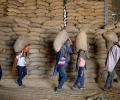
Domestic exporters on Monday expressed concerns over the crisis in Bangladesh and said the developments in the neighbouring country would have implications on bilateral trade. However, exporters expect that the situation may normalise soon. According to exporters, they are already facing disruptions in exports to Bangladesh due to a shortage of foreign exchange in that country.

'Indian markets may initially react and follow the pattern of US and other global markets post US elections.'

'Forget your loss or profit in your portfolio.' 'Look at how much cash you have in hand.' 'If you don't have cash in hand, liquidate at least partially; get into about 20 per cent in cash.'

'Investors with higher risk appetite and longer horizon (more than one year) can invest in longer-duration funds like corporate bond funds, long-duration funds and gilt funds for maximum gain.'
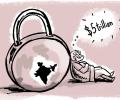
India decisively withstood global headwinds in 2023 and is likely to remain as the world's fastest-growing major economy on the back of growing demand, moderate inflation, stable interest rate regime and robust foreign exchange reserves. Despite widespread pessimism witnessed among the developed nations and the worsening geopolitical situation, India recorded a gross domestic product (GDP) expansion of 6.1 per cent in the March quarter. The growth moved up to 7.8 per cent in the June quarter and was 7.6 per cent in the September quarter. For the first six months of this fiscal, the growth was 7.7 per cent.

'Disengagement is merely the first step in a lengthy process of arriving at a new normal along the LAC in Eastern Ladakh and the entire land boundary.' 'The Indian government should insist on the restoration of the status quo ante in Eastern Ladakh.'

The Indian IT services sector is staring at a second consecutive year of muted revenue growth due to modest increase in tech spends in Europe and the US, a domestic rating agency said on Wednesday. Crisil Ratings said it expects the sector to grow at 5-7 per cent in FY25, after a growth of 6 per cent estimated to have been achieved in FY24. The overall industry size is pegged at $250 billion and it creates over 50 lakh direct jobs.

If the war in the Israel-Gaza region escalates into a larger West Asian conflict, it could pose problems.

'.. if you do not want to take the asset allocation call.'' 'This category of funds can offer optimum risk-adjusted returns.'
Among the Sensex firms, Infosys, Bharti Airtel, NTPC, Tata Motors, IndusInd Bank, Bajaj Finance, ICICI Bank, Tech Mahindra, Titan and Axis Bank were among the major laggards. Tata Steel, State Bank of India, Mahindra & Mahindra, Maruti and Nestle were the gainers.

The government is targeting export of goods and services worth $2 trillion by 2030.

'More than investors, fund houses, and advisors have raised caution and limited flows on small-and mid-caps.'

Escalation of the conflict in West Asia between Israel and Iran has had a direct impact on the energy markets, and more broadly on the financial markets as well as the global economy.

'We see mid-and small-caps as a real pot of gold.' 'From a 10-15 years perspective, mid-and small-cap are likely to outperform the larger index, as they have done in the past.'

Prices may go up because of higher energy costs, caused by the rise in shipping charges, with commercial vessels taking a longer route to avoid the troubled Red Sea region, the finance ministry said on Monday. Iran-backed Houthi rebels of Yemen are repeatedly attacking ships in the Red Sea. While the global economy is grappling with challenges such as sticky inflation, sluggish growth, and mounting fiscal pressure, India's external sector could face "potential risks" due to the ongoing geopolitical tensions, according to the finance ministry's report on the review of the Indian economy.

'While Indian markets are indeed not inexpensive, the valuations of largecap stocks are still a considerable distance from being overstretched.'

India has overtaken the United States (US) to become the second-most sought-after manufacturing destination globally, driven mainly by cost competitiveness, according to real estate consultant Cushman & Wakefield. China remains at number one position, the consultant said in its 2021 Global Manufacturing Risk Index, which assessed the most advantageous locations for global manufacturing among 47 countries in Europe, the Americas and Asia-Pacific (APAC). "India takes the second spot after China as the most sought-after manufacturing destination globally," Cushman and Wakefield said in a statement. The US is at third position, followed by Canada, Czech Republic, Indonesia, Lithuania, Thailand, Malaysia and Poland. In last year's report, the US was at second position while India ranked third.

In 2022, gold emerged as the top performer among all conventional asset classes with over 14 per cent returns mainly owing to the depreciation of the rupee.

'Similar to the case of the digital payment system where the government created a public platform and others joined in, we are exploring a similar structure to create a PPP platform where the compute required for AI could be accessed by the small player.'

Just a day after an agreement was signed between Hmar and Meitei representatives to restore peace in ethnic violence-hit Jiribam district of Manipur, the apex body of the Hmar community said that the pact stood 'null and void'.

'It is the best avenue for investors who would like to take long-term exposure to gold.'

Global gold demand has seen a year-on-year decline of 8 per cent during the April-June period to 948.4 tonnes and going ahead further monetary tightening and continued dollar strength may pose headwinds, says a report. According to the WGC Gold Demand Trends Q2 2022 report, the total gold demand during the second quarter of 2021 stood at 1,031.8 tonnes. The year-on-year demand was affected by increase in gold electronic traded funds (ETFs) outflow, decline in Central banks buying and lower demand from the technology segment, the report said.

A procession of barges will take nearly 7,000 athletes along the river past Paris's most famous landmarks, while more than 300,000 spectators will watch from the banks.

Private equity (PE) investments in India have fallen to a 6-year low at $24.2 billion in the financial year ending March 2024. Investments via PE deals are down 47 per cent compared to FY23, when private equity deals worth $45.8 billion were signed. According to data sourced from Bloomberg, PE firms had signed record deals worth $80 billion in the financial year ending March 2022.

India has emerged as a 'major power' by achieving outstanding results in economic development and social governance and its transformation as a stronger, assertive country has made it a 'new geopolitical factor', according to a commentary by a Chinese scholar in a state-run newspaper in Beijing.

Retail inflation eased to an 11-month low of 4.83 per cent in April as prices of some kitchen items declined though overall food basket firmed up marginally, according to a government data released on Monday. The Consumer Price Index (CPI)-based retail inflation was 4.85 per cent in March. It was 4.7 per cent in April 2023.
'If you invest in sovereign gold bond, you are going to get the price rise of gold over an eight year period.' 'You're also going to get that two-and-a-half percent which the Government of India is willing to give you, treating the money that you've invested in the sovereign gold bond as a kind of a FD or a deposit.' 'That kind of return you can never get anywhere else.'
